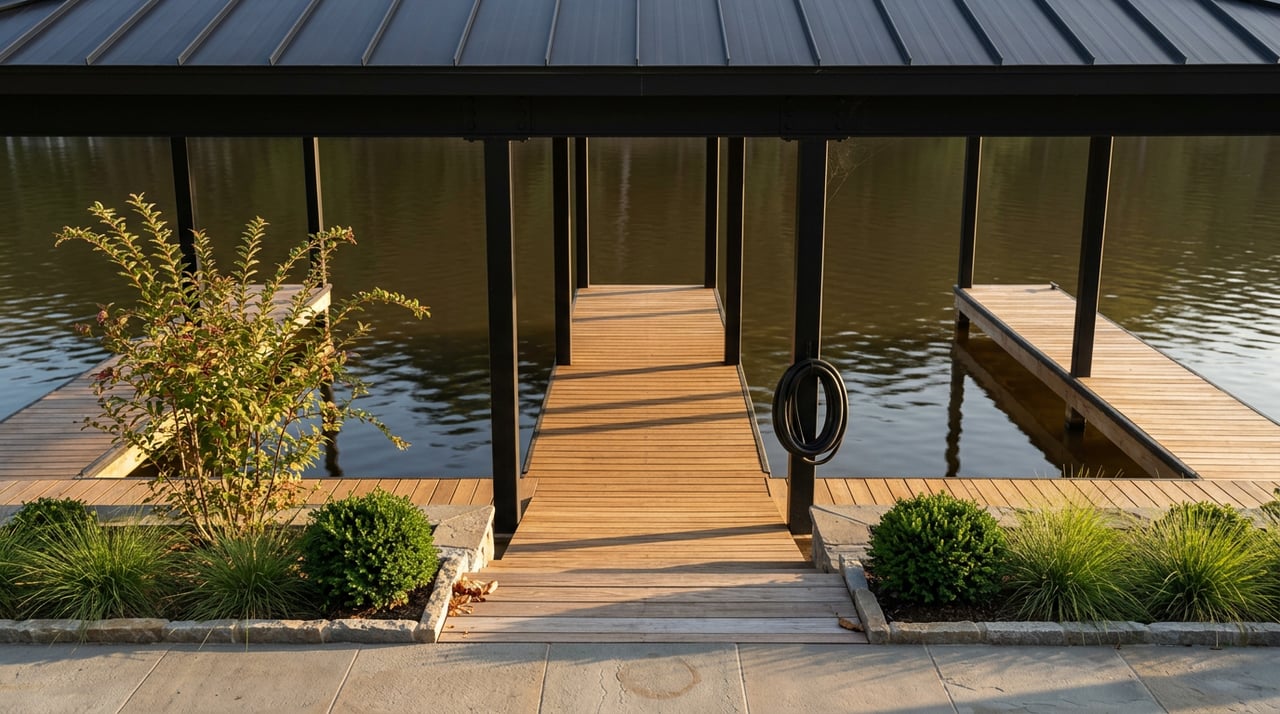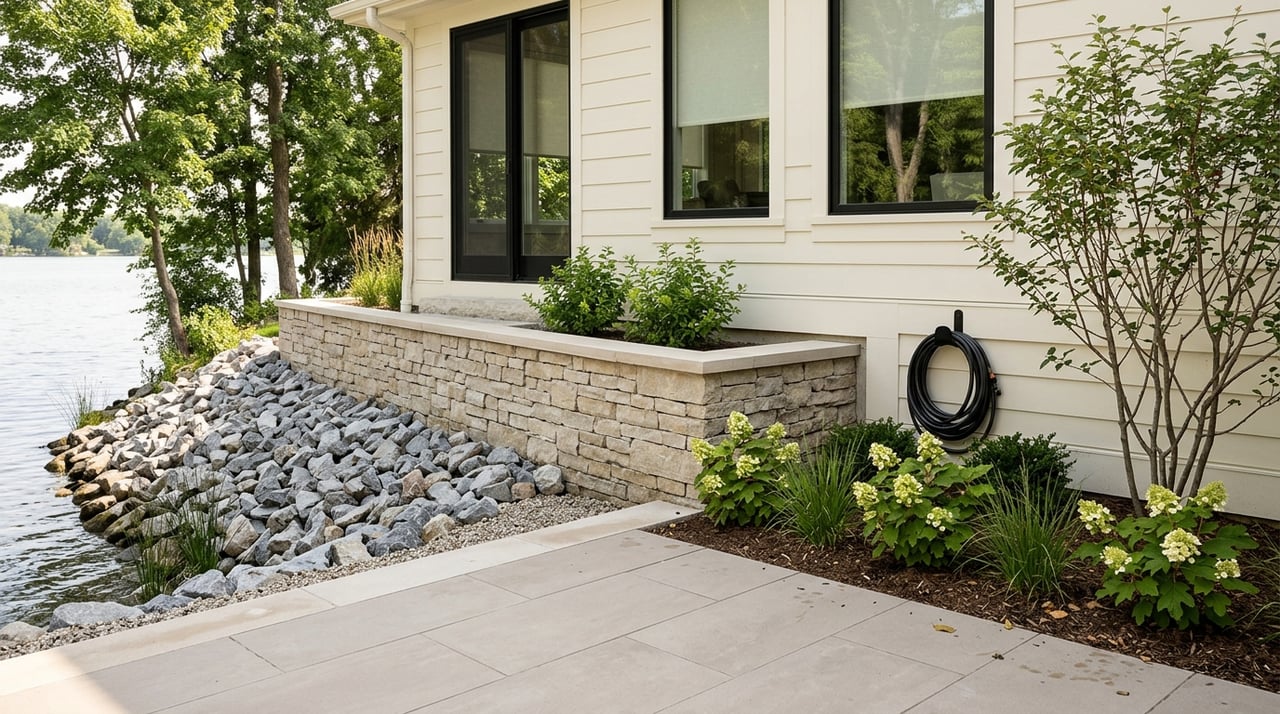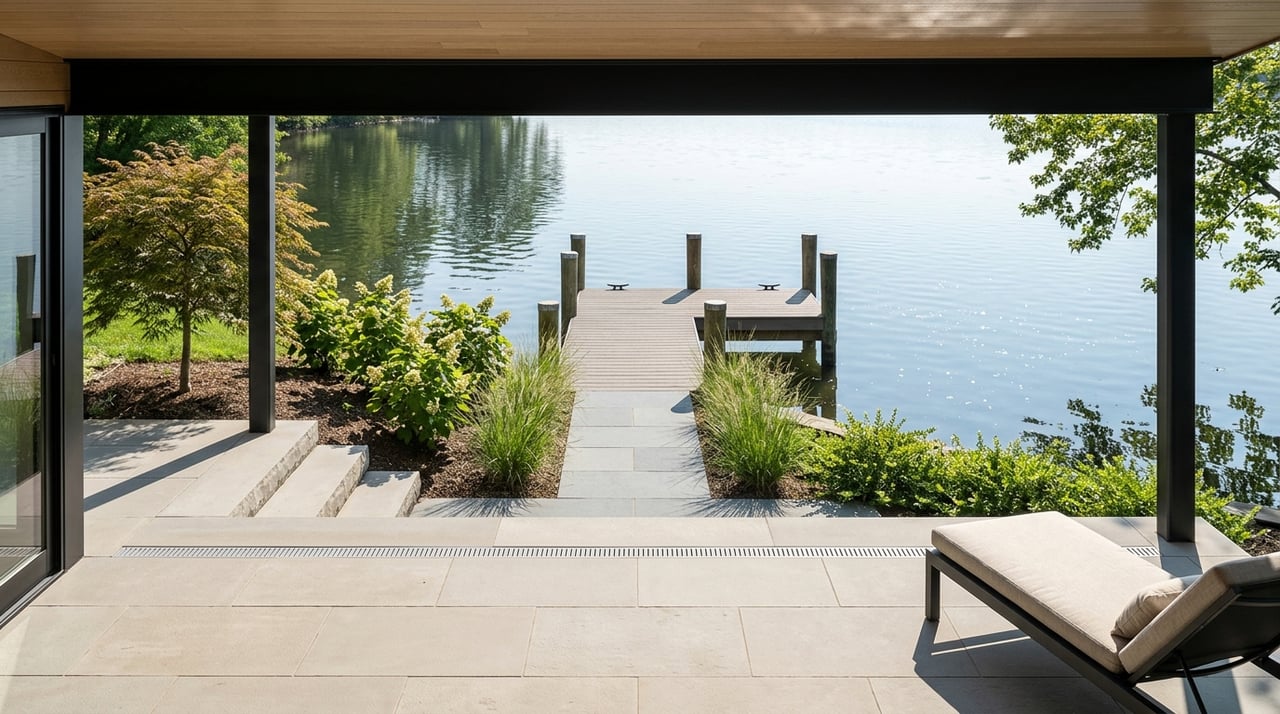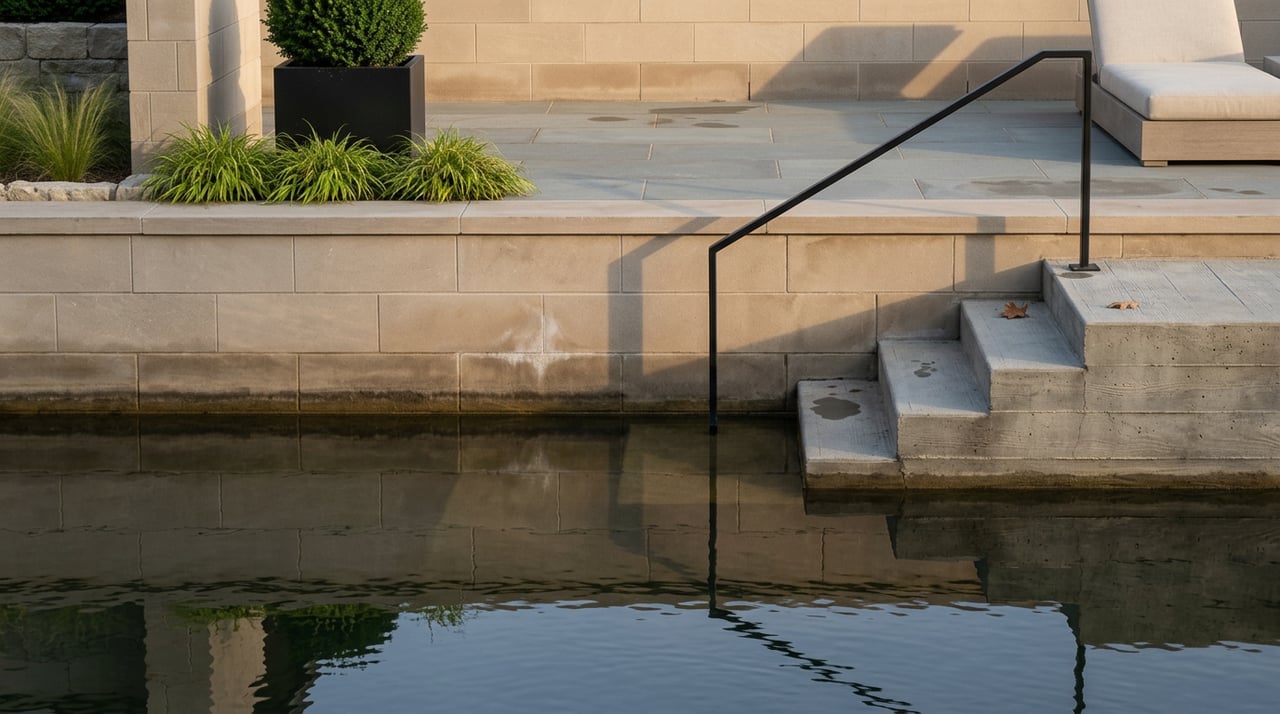
Two listings on the Loudon County side of Watts Bar sit within a few hundred yards of each other. Both are called "waterfront." Both are priced around the lake's median list of $425,000. One conveys a 1,800 square-foot covered dock with a boat lift and reliable ten-foot water at the end of the walkway in January. The other conveys a permit for a 1,000 square-foot uncovered dock over a cove that goes to mud from November through May. The portal shows you the same word. The market does not.
The thesis is simple. On Watts Bar, "waterfront" is not one product. It is three assets bundled into one deed: the land, a federal dock permit, and a seasonal depth profile. Price the bundle without pricing the parts and you overpay for one and underestimate the other.
The 60-Day Clock That Starts at Closing
The friction that catches buyers off guard is not a Tennessee rule. It is a federal one. Permits do not automatically transfer with property ownership, and the new owner is required to apply to TVA for a Section 26a permit within 60 days of closing on the property. Miss the window and the consequences are not theoretical. If the new property owner does not transfer the permit for the structure, the property owner loses any grandfathering of past approvals for any variances from the present regulations.
That is where the math shifts. A dock built in 1998 under an older rule set may have a footprint, a second-story configuration, or a lakeward reach that today's regulations would not approve. Passed inside 60 days and left alone, it stays. Passed late, or modified after transfer, and TVA views any application filed after the 60-day time period, such as for repairs, modifications, or improvements, as an application for a new structure subject to the current regulatory regime, which can force the property owner to remove the old structure and start over from scratch with a structure that is compliant with the latest requirements.
The fee to move the paperwork is modest. The fee to transfer ownership only is $250.00. The cost of not moving it can be a dock.
Two practical implications belong in your offer strategy. First, ask for the current permit and every attached drawing before you sign, not at inspection. Review the permit and check to see whether all shoreline construction — docks, ramps, seawalls, land-based structures, utilities — is listed on the permit, then walk the site and be sure the plans in your permit match what is constructed on site. A seawall poured after the last permit revision is an unauthorized modification that becomes your problem the day you close. Second, treat the 60-day filing as a closing-week task, not a "we'll get to it." Waterfront permitting specialists like Waterfront Permitting Services and dock builders such as Tennessee Dock Masters and LMH Waterfront Construction handle these transfers routinely, and the paperwork is straightforward when the underlying structure is compliant.
Why One Dock Can Be 1,800 Square Feet and the Next Only 1,000
This is the value delta portals cannot see, and it is where Watts Bar Estates has a specific advantage over newer subdivisions farther down the lake.
Generally, in new developments, docks, piers, boathouses and other residential water-use facilities must be 1,000 square feet or less and use of TVA property would be limited to an access corridor; however, you may be eligible for a waiver to these requirements based on your location. The waiver is the number that matters. Under federal rule, "preexisting development" means the water-use facility will be located in a subdivision recorded before November 1, 1999, and TVA permitted at least one water-use facility in the subdivision prior to November 1, 1999, and water-use facilities located in an area of preexisting development shall not exceed a total footprint area of 1,800 square feet.
Eighty percent more usable dock, on the same lake, on the same shoreline, for the same permit fee. That is not cosmetic. That is a covered slip plus an uncovered slip plus a swim platform on one lot, and a single uncovered slip on a lot next door in a subdivision recorded in 2003.
A rough side-by-side of what two "waterfront" listings can actually contain:
| Feature | Preexisting subdivision lot | Post-1999 subdivision lot |
|---|---|---|
| Max dock footprint | Up to 1,800 sq ft | 1,000 sq ft |
| Grandfathered variances possible | Yes, if permit is transferred in 60 days | No |
| Second-story deck allowed | Yes, open with railing only | Yes, open with railing only |
| Second-story roof or siding | Not permitted | Not permitted |
| TVA application fee, new permit | $1,000 | $1,000 |
The second-story rule catches sellers off guard more than buyers. Second stories on docks can be constructed as an open deck with railing, but they cannot be covered with a roof or enclosed with siding or screening, and if the second story of a dock is covered, it will likely have to be removed. A covered upper deck on a dock in a listing photo is a red flag worth resolving before you write an offer, not after.
The Six Feet That Change Everything from November to May
Now the physical asset. Watts Bar is a main-river reservoir, and its operating curve is public. To maintain the water depth required for navigation, the minimum winter elevation for Watts Bar Reservoir is 735 feet, and the typical summer operating range is between 740 and 741 feet. The seasonal drawdown begins after the 4th of July weekend on Kentucky Reservoir; following the Labor Day weekend on Chickamauga, Guntersville, Wheeler and Pickwick; and on November 1 on Fort Loudoun and Watts Bar.
Six feet is not much on the graph. On a shallow cove it is everything. A slip that carries five feet at summer pool carries flat mud in February. A ramp that launches at 740 is unusable at 736. This is why main-channel frontage, or frontage in a deep-water cove with a dredged access channel, trades at a premium that median-price data flattens out.
The upside is that the schedule is predictable. Summer pool holds through Labor Day, drawdown begins November 1, and refill is timed for the standard boating season. That predictability lets you underwrite the asset. Ask the seller for photographs of the shoreline at winter minimum, not just the July drone shot the listing agent already staged. If the seller cannot produce them, drive the road in January and take your own.
The waterside anchors that stay open through the season give you a proxy for how "live" a given stretch of lake really is. Named on-the-water kitchens include Maple Creek On The Water at Euchee Marina, Oakey's on the Water at Caney Creek Marina, and on-site kitchens at Terrace View and Blue Springs Crow's Nest. Their consistent operation at main-channel locations is a signal about depth reliability that no MLS field captures.
What This Means Before You Write an Offer
A short due-diligence list that flows from the three mechanisms above:
- Request the current Section 26a permit and every attached drawing at contract, not at inspection.
- Confirm the subdivision plat recording date. Pre-November 1, 1999 opens the door to the 1,800 sq ft footprint.
- Walk the shoreline with the seller present and match every visible structure against the permit drawings. Seawalls, steps, and utilities all count.
- Ask for photographs of the water line at winter minimum, or plan a January site visit.
- Budget the 60-day transfer as a closing-week task. The $250 filing is cheap. The consequence of missing it is not.
- If the dock has any covered second story, resolve the compliance question in writing before the option period ends.
A Short FAQ
Does a permit transfer automatically if I buy the property? No. Permits do not automatically transfer with property ownership, and the new owner is required to apply to TVA for a Section 26a permit within 60 days of closing on the property.
How long does a new dock permit take on Watts Bar? The permit application fee for minor shoreline alterations on TVA reservoirs is $1,000, and TVA strives to issue permits within 120 days. Practitioners on the lake report common ranges of 100 to 150 days when applications are complete.
Can I put a covered second story on the boathouse? No. Open decks with railing are allowed. Roofed or enclosed second stories are not, and existing covered second stories are subject to removal.
How far can a dock extend from shore? Under the regional permit governing Watts Bar and neighboring TVA lakes, the total length of the dock including walkways, dock to shoreline, shall not extend into the waterway more than one-third the distance from the minimum pool shoreline to the opposite shoreline, or 150 feet, whichever is the lesser distance.
Is Watts Bar Estates itself a preexisting development for TVA purposes? That depends on the specific plat recording date and whether TVA permitted a facility in the subdivision before November 1, 1999. It is a document check, not a marketing claim, and it is worth resolving before you commit to a number.
Waterfront pricing at Watts Bar rewards buyers who read the permit before the listing. If you would like a set of eyes on a specific dock permit, a plat recording date, or a shoreline before you write an offer, Nancy Keith offers a complimentary consultation and will walk the parcel with you. Schedule a free consultation and price the parts, not the bundle.